
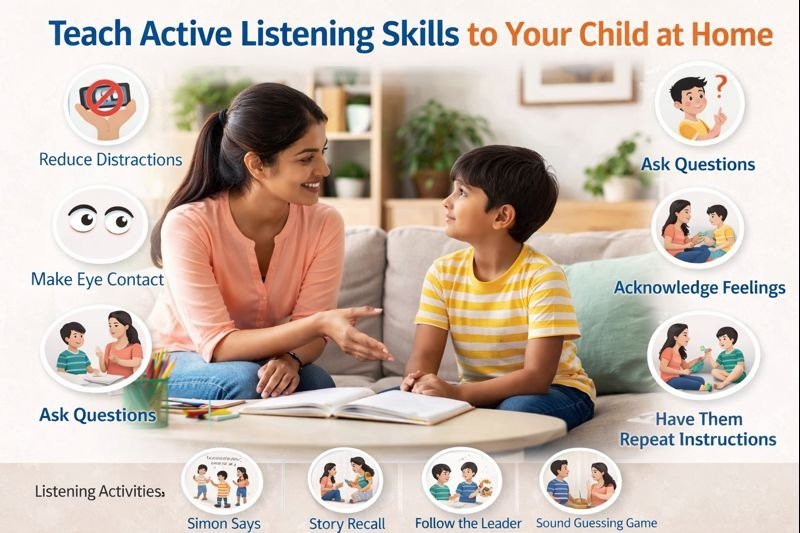
In today’s fast-paced, digital-first world, many parents notice a common challenge at homechildren hear instructions but don’t always listen. With constant exposure to screens, online learning, and busy schedules, children are often surrounded by distractions that make focused listening difficult. Developing strong listening skills for children is essential not only for academic success but also for emotional intelligence, healthy relationships, and lifelong learning.
Listening is more than just hearing words; it involves understanding, processing, remembering, and responding thoughtfully. A child who listens well is better equipped to follow instructions, engage in conversations, and connect meaningfully with others.
Teaching active listening skills for kids at home helps children become confident communicators, attentive learners, and empathetic individuals. The good news is that parents don’t need professional training or complex tools to do this. With simple daily practices,
With patience and consistency, families can nurture excellent child communication skills right from their living rooms.
This blog explores why listening matters, how parents can model good habits, practical techniques, common challenges, and fun listening activities for kids that make learning enjoyable and effective.
What Are Listening Skills for Children?
Listening skills for children involve the ability to focus on spoken information, understand the message, remember key points, and respond appropriately. These skills form the foundation of learning, communication, and social interaction.
Good listening skills help children:
• Follow instructions clearly
• Perform better in school
• Build friendships
• Resolve conflicts peacefully
• Develop empathy and respect
• Improve concentration and memory
When children struggle with listening, it often leads to misunderstandings, frustration, repeated instructions, and behavioural challenges. Poor listening can also affect classroom performance and peer relationships. That’s why teaching active listening for kids at an early age is so important sets the stage for lifelong success.
What Is Active Listening for Kids?
Active listening for kids means listening with full attention and intention. It goes beyond simply being quiet while someone is speaking. Active listening involves both verbal and non-verbal skills.
It includes:
• Maintaining eye contact
• Avoiding interruptions
• Understanding emotions behind words
• Asking relevant questions
• Responding thoughtfully
Unlike passive hearing, active listening skills for kids require focus, patience, and engagement. When children practice active listening, they learn that communication is a two-way process built on respect, understanding, and connection.
Parents play a crucial role in shaping this behaviour at home. Children naturally imitate what they see, making parental behaviour one of the strongest teaching tools.
Why Communication Skills for Children Matter
Strong communication skills for children go far beyond speaking clearly or using the right words. They include listening, understanding non-verbal cues, expressing thoughts respectfully, and responding appropriately to others.
Children with good communication skills:
• Perform better academically
• Feel more confident expressing ideas
• Build stronger friendships
• Handle emotions effectively
• Develop leadership and teamwork skills
• Adapt better in social settings
Listening is the backbone of communication. Without listening, communication breaks down. Misunderstandings arise, instructions are missed, and relationships suffer. This is why parents should focus on developing children’s listening skills as part of everyday life, not just during study time.
Common Reasons Children Struggle with Listening
Before addressing solutions, it’s important to understand why listening difficulties occur. Many listening challenges are developmentally normal and can be improved with guidance.
Common reasons include:
1. Distractions – Screens, toys, background noise, and multitasking
2. Short attention spans – Especially in younger children
3. Lack of routine – Inconsistent instructions confuse children
4. Emotional overload – Stress, excitement, fatigue, or frustration
5. Modelling behaviour – Children imitate adults who multitask or interrupt
Understanding these factors helps parents choose the right strategies to build better listening habits with empathy rather than frustration.
How to Improve Listening Skills in Children at Home
1. Be a Role Model
Children learn by observing adults. When parents listen attentively, avoid interrupting, and show
empathy, children naturally copy the behavior. Put away phones, maintain eye contact, and
respond thoughtfully when your child speaks. Even short moments of focused listening leave a
lasting impression.
2. Get Your Child’s Attention First
Before giving instructions, ensure your child is focused. Say their name, make eye contact, and
speak calmly. This simple step dramatically improves listening success and reduces repeated
instructions.
3. Keep Instructions Simple and Clear
Long explanations can overwhelm children. Use short sentences and break tasks into steps. Clear
communication supports better understanding, memory, and cooperation.
4. Encourage Two-Way Communication
Ask questions after giving instructions. Encourage children to repeat what they heard in their
own words. This reinforces comprehension, responsibility, and confidence.
5. Acknowledge Feelings:
Sometimes children don’t listen because they feel unheard. Validating emotions such as frustration or excitement builds trust and openness, making children more receptive listeners.
Fun Listening Activities for Kids
Learning through play is one of the most effective ways to strengthen listening skills. These
listening activities for kids make practice enjoyable rather than stressful.
1. Simon Says
This classic game improves focus, attention, and listening accuracy. Children must carefully
listen before acting, reinforcing self-control and comprehension.
2. Story Recall
Read a short story and ask questions about characters, events, or lessons. This enhances listening,
memory, comprehension, and critical thinking.
3. Follow the Leader
Give step-by-step instructions during playtime or daily routines. Gradually increase complexity
to challenge listening abilities.
4. Sound Guessing Game
Play everyday sounds and ask children to identify them. This sharpens auditory awareness and
concentration.
5. Role-Play Conversations
Practice polite conversations where children listen, respond, and ask questions. This strengthens
child communication skills naturally and builds social confidence.
Creating a Listening-Friendly Home Environment
A calm, structured environment supports better listening and learning.
Helpful steps include:
• Reducing background noise
• Setting clear daily routines
• Establishing consistent rules
• Limiting screen time
• Encouraging quiet family discussions
A peaceful atmosphere allows children to focus, process information, and respond effectively
without feeling overwhelmed
Using Positive Reinforcement
Praise and encouragement motivate children to improve their listening behavior. Celebrate small
successes when your child listens well. Positive reinforcement builds confidence and reinforces
good habits.
Instead of punishment, use guidance such as:
• “I liked how you listened carefully.”
• “Thank you for waiting your turn.”
Positive language encourages long-term growth in listening skills for children.
Teaching Active Listening Through Everyday Moments
Parents can turn daily routines into powerful learning opportunities:
• Mealtime conversations
• Bedtime storytelling
• Family discussions
• Planning activities together
These everyday moments teach active listening skills for kids naturally, without pressure or
formal lessons
How Listening Skills Support Academic Success
Strong listening skills help children:
• Understand classroom lessons
• Follow teacher instructions
• Participate confidently
• Improve reading comprehension
• Develop better study habits
While schools emphasise listening, the foundation is built at home. Parental involvement plays a major role in academic confidence and long-term success.
Building Empathy Through Active Listening
When children learn to listen attentively, they also learn empathy. Active listening helps them understand others’ emotions, perspectives, and needs. This ability strengthens friendships, teamwork, and emotional intelligence. Teaching children to listen kindly creates compassionate individuals who respect others and communicate thoughtfully.
Overcoming Challenges with Patience
Improving listening skills takes time. Children may occasionally struggle, forget, or regress. Consistency, patience, and encouragement are key. Avoid labeling children as “bad listeners.” Instead, guide them with understanding, practice, and
reassurance.
Listening Skills by Age: What Parents Should Expect
Listening abilities develop gradually as children grow, and expectations should be age-appropriate. For younger children, especially preschoolers, listening skills are still emerging. Short instructions, repetition, and visual cues work best at this stage. Parents can use songs, stories, and simple games to build attention and understanding. As children enter primary school, their ability to focus improves. They can follow multi-step instructions, remember details, and engage in meaningful conversations. This is a crucial stage to strengthen active listening skills for kids through discussions, storytelling, and guided activities. Older children and pre-teens benefit from being included in family conversations and decision-making. Encouraging them to listen to different viewpoints and respond respectfully helps refine child communication skills and prepares them for academic and social challenges ahead. Understanding age-based development helps parents support listening skills with patience and confidence.
Conclusion
Teaching children to listen is one of the greatest gifts parents and educators can offer. Strong listening skills for children support learning, healthy relationships, confidence, and emotional well-being. By practicing active listening for kids, encouraging open communication, and engaging in fun listening activities for kids, parents can significantly improve child
communication skills both at home and in school. Remember, listening is learned through example, patience, and consistency. Every conversation becomes an opportunity to build a stronger connection with your child and help them grow into a thoughtful, confident communicator. At Gurajada School, we believe that strong communication begins with attentive listening. Through a nurturing learning environment, interactive classroom practices, and a focus on holistic development, Gurajada School supports children in building effective listening and communication skills that prepare them for lifelong success.
Contact Us
If you would like guidance on child development, communication skills, or parenting support,feel free to reach out to us:
Email: gurajadaschools@gmail.com
Phone: +91 9491271151
Website: www.gurajadaschool.in
Visit our website and click on Contact Us for more details.
We’re here to support you and your child on every step of their growth journey.