
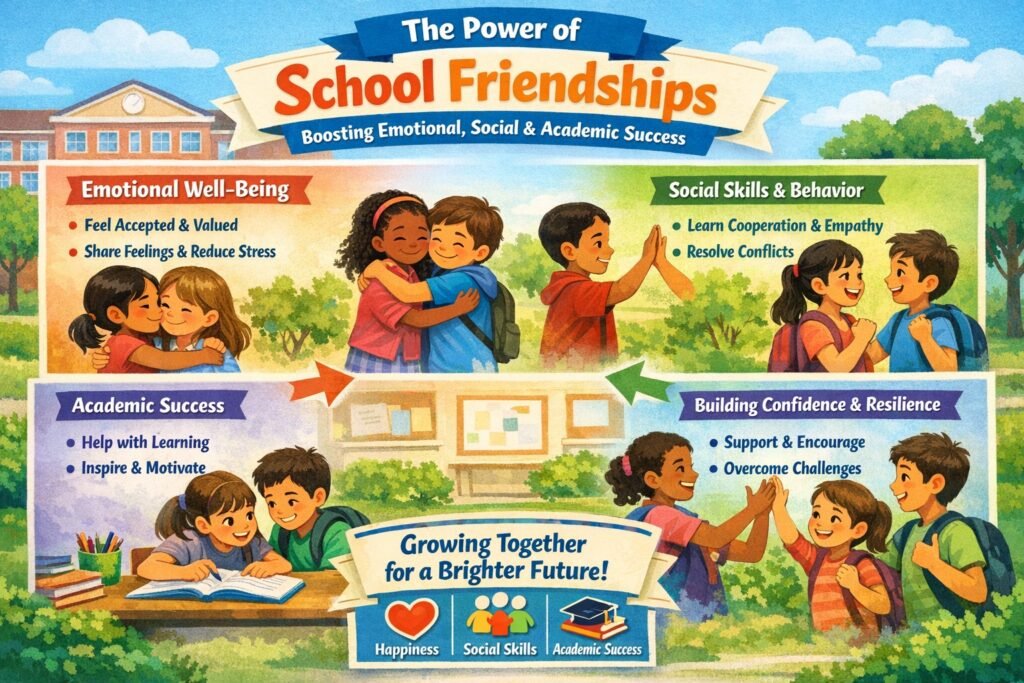
School is not just a place for textbooks and exams-it is also where lifelong friendships begin. These friendships play a powerful role in shaping a child’s emotional well-being, social skills, and academic growth. Here’s how school friendships make a real difference in a student’s life.
Emotional Growth and Well-Being
Friendships give students a sense of belonging and emotional security. Having friends at school
helps children:
• Feel accepted, valued, and confident
• Share feelings, joys, and worries freely
• Reduce stress, loneliness, and anxiety
When students feel emotionally supported, they are happier and more motivated to attend school
every day.
Social Skills and Positive Behaviour
School friendships help children learn important life skills such as:
• Communication and teamwork
• Sharing, cooperation, and empathy
• Resolving conflicts peacefully
Through daily interactions with friends, students understand respect, kindness, and
responsibility-skills that shape strong character and good citizenship.
Academic Success and Motivation
Friendships also support learning in many ways. Friends often:
• Help each other understand lessons and homework
• Encourage participation in class activities
• Motivate one another to do better in studies
Students who feel connected at school are more engaged, confident, and willing to ask questions
and explore new ideas.
Building Confidence and Resilience
Positive friendships teach students how to face challenges together. Friends provide
encouragement during failures and celebrate successes, helping children:
• Build self-confidence
• Develop problem-solving skills
• Learn perseverance and resilience
Conclusion
School friendships are a foundation for emotional happiness, social development, and academic achievement. By nurturing positive relationships, schools help students grow into confident, caring, and successful individuals-both inside and outside the classroom. Strong friendships today build stronger futures tomorrow. At Gurajada, a friendly and inclusive school culture encourages meaningful friendships through collaborative learning, group activities, and mutual respect. This supportive environment helps students feel safe, valued, and connected, allowing friendships to strengthen their emotional well-being, social skills, and academic success.